Pacific Center - Migration Services
SUNSHINE COAST

SUNSHINE COAST OVERVIEW:

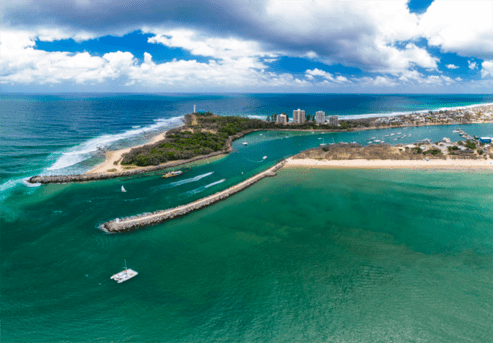
The Sunshine Coast is a region of beaches, hinterland, and small coastal towns about 90 minutes north of Brisbane. It stretches roughly 60 kilometres from Caloundra in the south to Noosa in the north, with a regional population of around 350,000.

Unlike the Gold Coast, there's no single dominant city — the area is a network of distinct towns, each with its own character. Noosa is the upscale and tourist-oriented hub. Mooloolaba and Maroochydore handle most of the day-to-day commercial activity. Sunshine Coast Airport offers domestic flights; international travellers usually fly into Brisbane.

SUNSHINE COAST WEATHER:

The climate is similar to Brisbane and the Gold Coast — humid subtropical, with around 260 sunny days per year. Summer (December–February) ranges from 22–29°C with afternoon thunderstorms. Winter (June–August) is dry and pleasant at 9–22°C, with cooler mornings inland.

Sea temperatures stay comfortable year-round, from about 21°C in winter to 27°C in summer. The hinterland (Maleny, Montville) is a few degrees cooler than the coast, especially in winter.

SUNSHINE COAST COST OF LIVING:

Costs are mid-range — slightly more expensive than Gold Coast in tourist hotspots like Noosa, similar elsewhere. A one-bedroom apartment ranges from AUD 1,500–2,200 per month depending on location, with Noosa at the higher end.

A coffee costs AUD 5–6, a casual meal AUD 20–28. Groceries are comparable to other Queensland cities. The lack of large discount supermarkets in some smaller towns can push costs up. A realistic monthly student budget sharing accommodation is AUD 2,000–2,600.

SUNSHINE COAST LIFESTYLE:

The pace is noticeably slower than the Gold Coast or Brisbane. The lifestyle centres on outdoor activities — surfing, paddleboarding, hiking in Noosa National Park, and weekend markets in the hinterland towns. Noosa attracts an older, wealthier crowd; Mooloolaba and Maroochydore are more mainstream and family-oriented; Caloundra is quieter and good value.
The Glasshouse Mountains and Maleny offer rainforest walks, lookouts, and dairy farms. The region is popular with retirees and remote workers, but increasingly attracts younger families priced out of Brisbane.

SUNSHINE COAST TRANSPORT:

Public transport is the weakest of any Queensland city — the region is spread out and most residents drive. Translink buses run between the main towns and to Brisbane, but services are infrequent compared to Brisbane or the Gold Coast.

There is no tram or train within the Sunshine Coast itself; the closest train station is at Landsborough, with services to Brisbane. A car is genuinely useful here, more so than in the Gold Coast or Brisbane. Cycling is popular along the coastal paths.

REQUEST A QUOTE FOR SUNSHINE COAST:

OUR EXPERT TEAM AT THE MANLY OFFICE IS AVAILABLE TO ASSIST YOU WITH
YOUR PLANS TO COME LIVE ABROAD. BY FILLING THE FORM YOU HELP ONE OF
OUR EDUCATION AND VISA SPECIALIST TO GET TO KNOW YOU BETTER AND
FIND THE BEST OPTION FOR YOU!